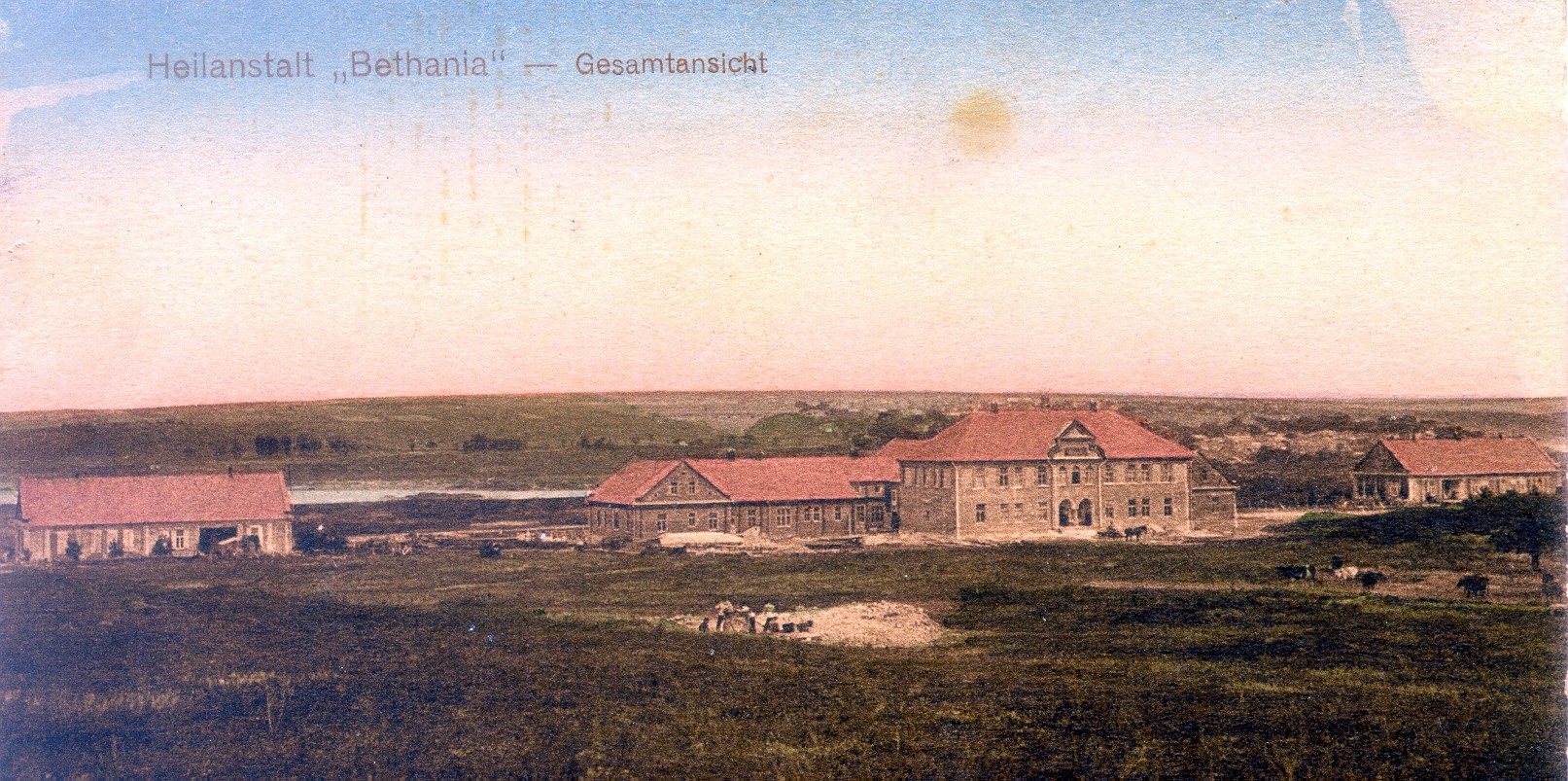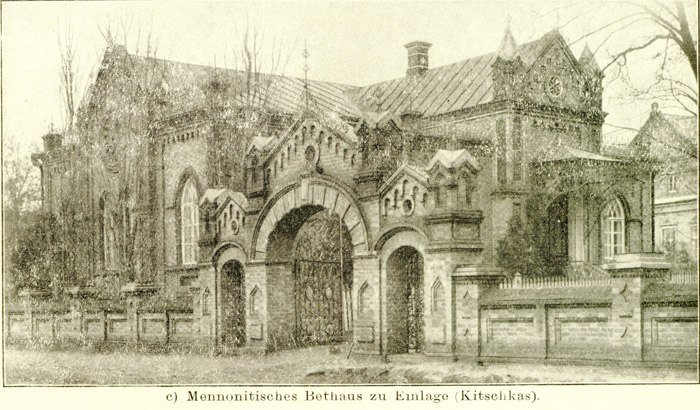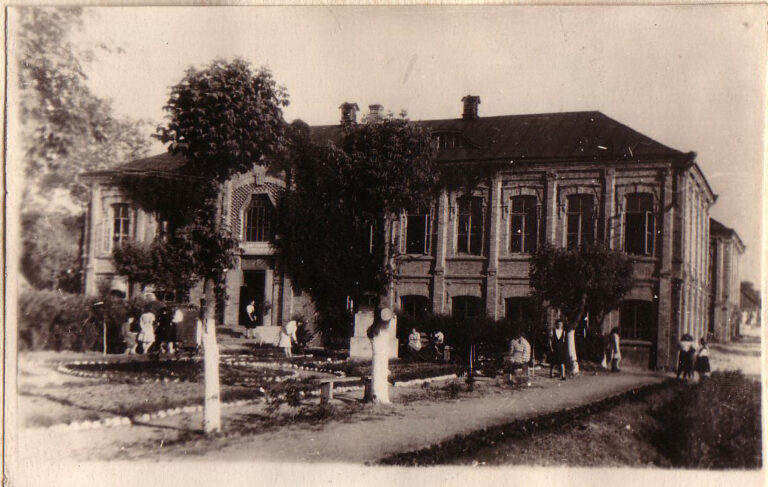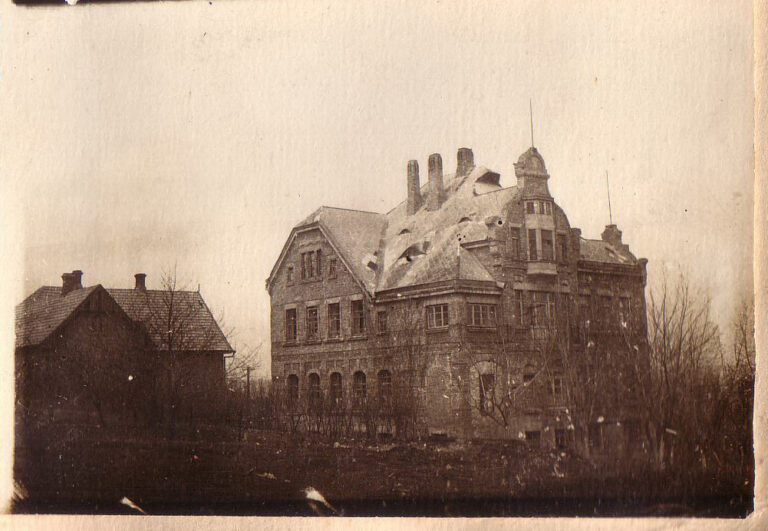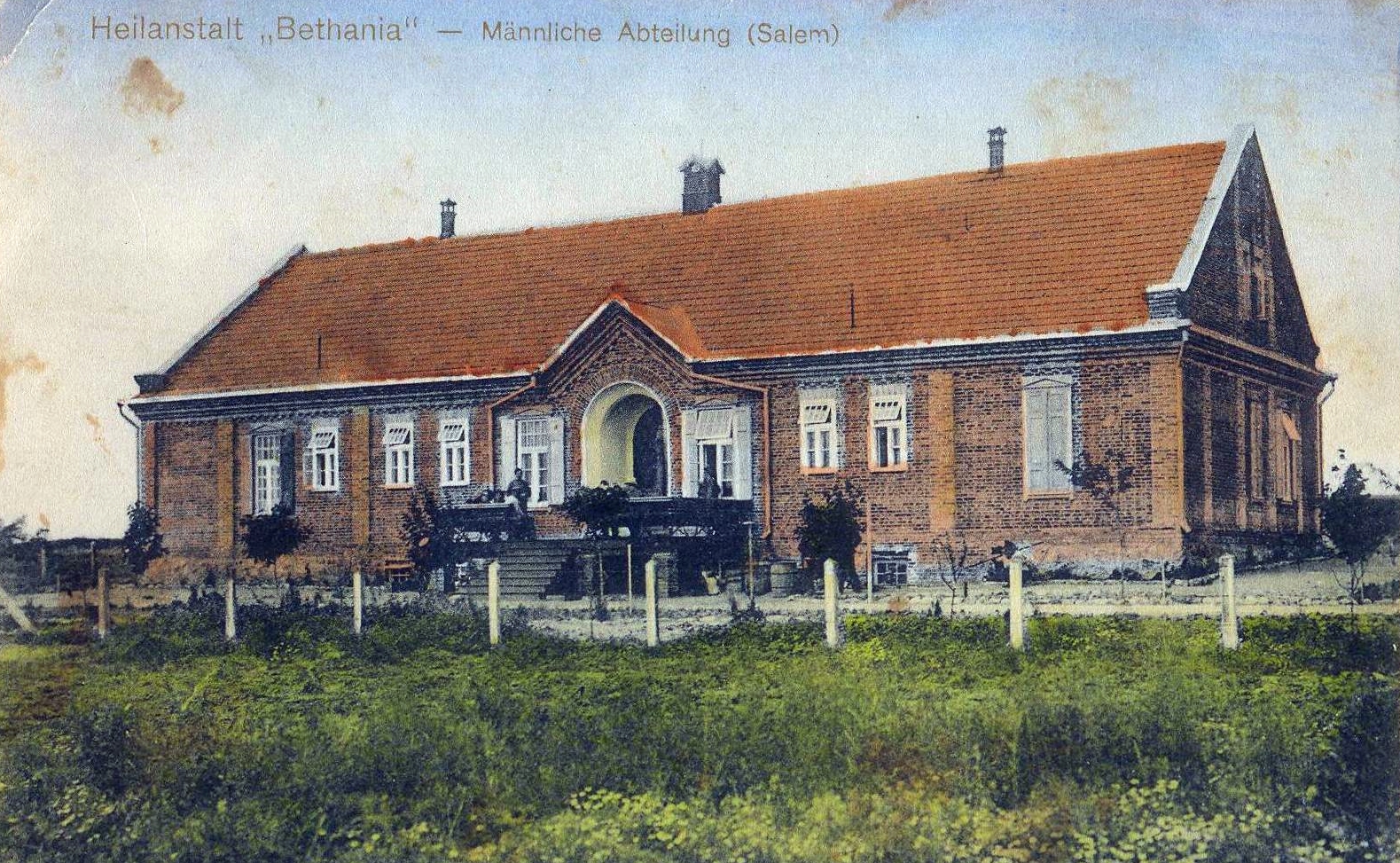
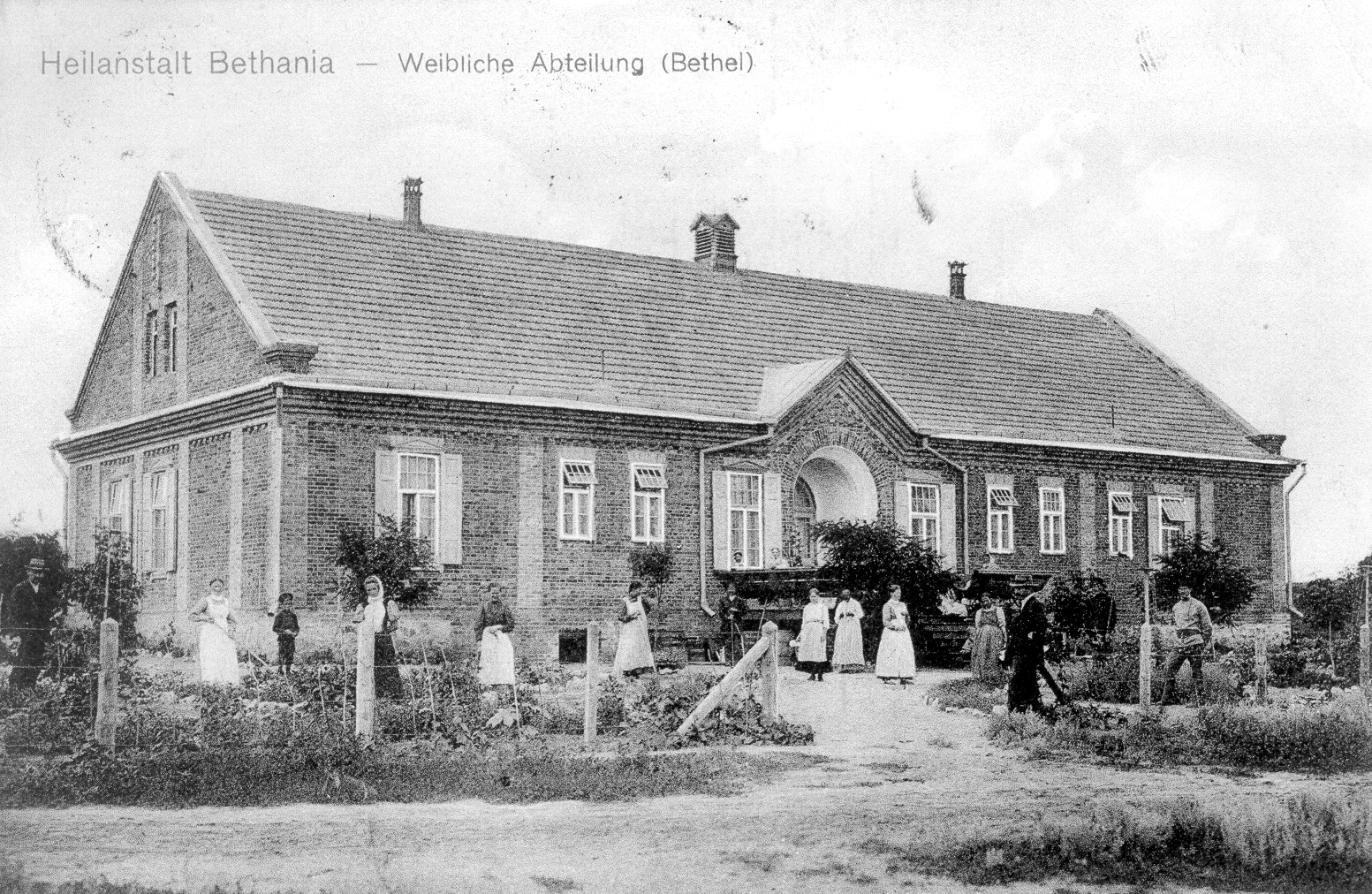
The specialised medical institution “Bethania,” founded in 1910 on 115 hectares between the colonies of Einlage and Kronswaide, became one of the most progressive in the country. It provided care for people with mental disorders, epilepsy, and nervous diseases.
The model for the institution was the German hospital “Bethel” in Bielefeld, with its revolutionary open “colony-city” model. Instead of traditional isolation, it employed the advanced labour therapy developed by Pastor Friedrich von Bodelschwingh: patients lived full lives, working in workshops and on farms.
The German architect Karl Siebold, who had experience designing similar institutions and churches in Germany, was invited to realise the concept. The construction committee was headed by Peter Schellenberg. The project was implemented slowly, as the foreign blueprints had to be constantly adapted to local conditions.
Construction became possible thanks to patrons. The owners of the Lepp and Wallmann plant provided agricultural equipment, while Wilhelm Schroeder donated 40,000 roubles (on the condition that two wards would accept patients regardless of religious denomination). The construction of the first two wards of 16 beds each cost 122,000 roubles. The women’s ward was completed in March and the men’s ward in August 1911.
In March 1913, the two-storey main building was opened. It housed additional women’s and men’s wards (22 beds each), doctors’ offices, a pharmacy, a dining hall, and an assembly hall for 300 visitors. On the grounds, houses for doctors were also built, and a kitchen garden and bakery were set up for patients’ occupational therapy.
The system provided for individual rooms and free movement around the grounds. Annual residence at “Bethania” cost 300 roubles, however for indigent patients, benefactors and church communities maintained 15 free beds.
The hospital was planned to be expanded to 300 places, but the First World War and the events of the Ukrainian Revolution halted its development. In April 1919, “Bethania” was nationalized. From 1925, the hospital ceased operations entirely. The final chapter in the institution’s history was written by the construction of the Dnipro Hydroelectric Power Station in 1927–1932 — the buildings were dismantled, as they fell within the flood zone of the Dnipro Reservoir.